
With many choices of automotive air filters on the market today it can sometimes become daunting for the consumer to select a filter that represents the best protection and flow characteristics for their dollar.
But why do we really need to be concerned about air filtration in the first place? The answer is quite simple. It's been said that many of the contaminates found in a vehicles motor oil gets there through the air filtration system. It's also been commonly held by lubricant experts that dirt is the number one cause of premature engine failure. With this in mind, it should be of high importance to research air filters and determine what the differences are and if anything can be gained by using one type of air filter over another.
In this thread, we will mainly focus on three popular types of air filters available today; paper - otherwise known as cellulose, wet gauze, and nanofiber.
Air Filter Construction
Paper: Cellulose media
Wet Gauze: Cotton media with wire screen reinforcement
Nanofiber: Glass media and wire screen reinforcement depending on application
The Paper Filter
The paper air filter is the most universally used air filter available on the market today and has been standard issue on cars and trucks since the early 1960s . A paper filter filters and flows relatively well, are cost effective, and are found at every auto parts store. The down side to paper is that they have to be replaced as much as every 3-months or 12,000-miles whichever comes first.
The Wet Gauze Filter
The wet gauze filter has been available for over 35-years and has become a popular choice among automotive and power sport enthusiasts. This style of air filter is marketed as a better flowing alternative to paper air filters and are commonly thought to increase a vehicles horsepower. Some manufactures back these filters with a million mile limited warranty and recommend filter cleaning every 30,000-to-50,000-miles. These filters are serviceable with a recommended cleaning and oil tackifier reapplication kit which are purchased additionally to the filter. Some find that a downside to these filters are the additional cost of a cleaning and re-oiling kit.
The Nanofiber Filter
While products containing microfibers have been available since the 1950s, the ultra-fine nanofiber technology didn't become available to the commercial market until 1981 by the Donaldson Company, Inc. Nano or Nano-technology refers to extremely small technology at the nano-meter scale. A nanometer is equal to one billionth of a meter. Donalson Company, Inc,. produces both stock replacement paper type air filters and their patented Ultra-Web and Synteq air and oil filters which utilize the nanofiber technology the company perfected. These top grade nanofiber filtration products have benefited such industries as transportation, construction, agriculture, mining, military and gas turbine. Up until recently, nanofiber technology was not widely available to the automotive market until Amsoil, Inc. gained exclusive licensing rights in 2004 to utilize Donaldson's proprietary nanofiber technology marketing both motor oil and air filtration products under their Ea filter line.
Watch Your Next Air Filter In Action

Click on image to enlarge - Cited: Donaldson Company, Inc.

M1 Abrams tank with pulse-jet air cleaner and Donaldson Nanofiber filter system for filtration of the turbine combustion air.Article: Donaldson Company Selected to Develop Filtration System for U.S. Army Abrams-Crusader Common Engine Program - link
Paper and Wet Gauze now have a tough new competitor to contend with after the introduction new Amsoil/Donaldson agreement. Availability of nanofiber air filters to the automotive market is now a reality.

AMSOIL Ea Air Filter media removes 5 times more dust than traditional cellulose filters and 50 times more dust than wet gauze. Cited: Amsoil, Inc.
Amsoil, Inc., produce air filters utilizing Donaldson Nanofiber media for a wide verity of domestic and foreign cars and light trucks.
AMSOIL Ea Stock Replacment Air Filters

AMSOIL Ea Universal Air Induction Filters


Amsoil Ea Induction Filter/K&N Cross Referance - Click on image to enlarge
AMSOIL Carbureted Racing Filters

Amsoil Racing Filter specifications and photos - pdf. link
AMSOIL/Injen Cold Air Intake Kits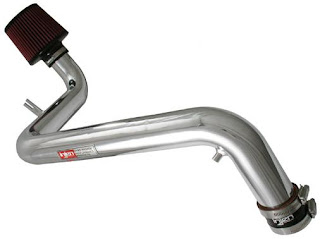
Image: Injen/Acura Cold Air Intake (CAI)

AMSOIL/Injen Cold Air Intake Kits


"During the 2007 SEMA show an official announcement was made launching the Co/Branded Injen/AMSOIL Power-Flow Diesel air intake systems.
Injen Technology and AMSOIL Inc. officially signed an agreement to cooperatively brand an all new diesel air intake system. Both Injen Technology and AMSOIL are established leaders within the performance industry and are known for innovation, quality and high performance products. These two highly acclaimed and successful companies came together and Co/Branded an advanced line of performance air intake systems called Diesel Power-Flow.
Representatives from both Injen and AMSOIL announced during the SEMA show, that the Power-Flow system is the only air intake system that incorporates an all new patent pending Injen Variable Induction Technology and an AMSOIL dry media Ea Nano-Fiber absolute efficiency air filter
Some of the top features and benefits will include:
Vi Technology (variable induction) will provide additional airflow and power on demand based upon the draw of the engine. There are four internal and totally independent valves designed to open and allow more air for those crucial moments when that extra power is required; passing, towing, climbing hills or track and off road racing.
AMSOIL Ea Nano-Fiber absolute efficiency custom designed air filter will filter out the finer dirt and dust particles up to 99.53% efficiency. For Diesel engines the Ea –filter removes 5 times more dust then traditional (paper) filter media and 50 times more dust then a wet gauze air filter. Injen Dyno tests show equivalent gains in horse power and torque. Incorporating the dry media allows for a simple cleaning by using a standard shop Vac.
Stainless steel pre-filters which will deflect the larger dirt particles commonly associated with immediate loss of air flow and power.
For added styling, proper air flow and that macho look, an all cast aluminum tube is included
You can anticipate seeing significant Co/Branding efforts to launch this powerful partnership in a wide variety of media and marketing materials along with a significant amount of race events, trade and consumer shows. The Injen/AMSOIL Diesel Power-Flow air intake systems will be available through all AMSOIL Dealers, most major automotive aftermarket retailers and wholesale distributors.
Injen/AMSOIL; The beginning of a New Era!" - Cited: Injen Technology
To select the correct Amsoil Ea Air Filter product for your vehicle, contact Anthony Garner via e-mail: compsyn@live.com
Below, the comments of Certified Lubrication Specialist, George Morrison regarding air filtration.
Introduction: The late George Morrison, was a Certified Lubrication Specialist by the Society of Trobologists and Lubrication Engineers as well as the founder and CEO of AV Lubricants, one of the largest Exxon/Mobil distributors in the United States. During his 35 years in the lubricant industry, He worked with such industries as Aviation and Coal Mining assisting with their specific lubricant needs in which hundreds of Used Oil Analysis reports went through his hands a week. As a result, Mr. Morrison was an expert in lubricant and lubricant filtration.
Quotes by Mr. Morrison:
"From a lube engineer's perspective that looks at a hundred or so oil analysis results a day, I would highly recommend you or anyone running a K&N or other aftermarket air filter do an engine oil analysis to determine that the filter is indeed doing its job. I can easily spot a K&N equipped vehicle oil analysis results as in 90% of cases the filter keeps out bricks and birds very effectively but little else. The #1 cause of reduced engine life is dirt. The #1 engine oil alert I look at is dirt. One teaspoon of dirt will destroy a large V-16 CAT engine.. i.e. we need to make sure we have the best filter media, tightest induction system possible to ensure maximum engine life. If you look at a K&N filter you can see through the medium very easily. Supposedly the 'tackifier' grabs the incoming dirt particles. Visualize a dirt particle approaching the filter medium at 100+ MPH: there is NO oil, no tackifier that is going to reach out and capture that particle. Filter face impact velocity is just too great." Cited: George Morrison - link
"Regarding the "easy 10 hp increase", I would be wary of the claim. A recent VW TDI dyno day revealed that the highest horsepower developed at the rear wheels was for a TDI equipped a paper, OEM equipped VW vs. the foam/paper/K&N, snorkled VW's." Cited: George Morrison - link
"If you have single digit silicon and low wear metals with your oil analysis results, you are about as good as it gets! That is a general target for dirt: i.e. single digits. If you have this with spectro, you have excellent air filtration with no induction leaks. As for recommendations, I suggest name brand/OEM paper. If a person wants to try another, do an oil analysis with quality paper, then another oil analysis, with particle count, for the aftermarket. This will give a complete picture of exactly how the aftermarket is doing." Cited: George Morrison - link
Summary: As stated above, Used Oil Analysis is the real world test which proves OR disproves the as advertised filter efficiency claims.
Below, a picture of a K&N brand wet gauze type air filter. If you click on the image to enlarge, look closely and notice the small pin holes of light in the cotton gauze filter media:

Click on the image to enlarge
Below, a picture of an Amsoil Ea Air filter, a optional replacement of the K&N wet gauze filter as shown above. Note the solid construction of the nanofiber media.

Click on the image to enlarge
Additional Reading
Technical Paper: CUMMINS - DEVELOPMENT OF HIGH DUST CAPACITY, HIGH EFFICIENCY ENGINE AIR FILTER WITH NANOFIBERS
Technical Paper: Donaldson Company Selected to Develop Filtration System for U.S. Army Abrams-Crusader Common Engine Program - link
Blog Post: Air and Oil Filters With Nanofiber Technology - link
Manufacturer & Dealer Information

Donaldson Company, Inc., headquartered in Minneapolis, Minnesota., is a leading worldwide provider of filtration systems and replacement parts. Founded in 1915, Donaldson is a technology-driven company committed to satisfying customer needs for filtration solutions through innovative research and development. Our 10,000 employees contribute to the company's success at over 30 manufacturing locations around the world. Donaldson is a member of the S&P MidCap 400 Index and Donaldson shares are traded on the New York Stock Exchange under the symbol DCI.

AMSOIL INC.

For more information about AMSOIL synthetic lubricants and performance filtration products contact Anthony Garner at Competition Synthetics. Anthony is an Amsoil T-1 Certified Independent Dealer. E-mail Anthony at compsyn@live.com, or visit http://competitionsynthetics.com


 Posts


